🏛️
Architectural & Design Models
Base boards, massing models and 1:1 mockups that stay dead flat on the table and survive the trip to the client.
The board that stays flat. Lightweight honeycomb cardboard sheets that cut clean with a craft knife, hold a two-metre wall without bowing, and take paint straight on the face — for models, props, cosplay, displays and prototypes.
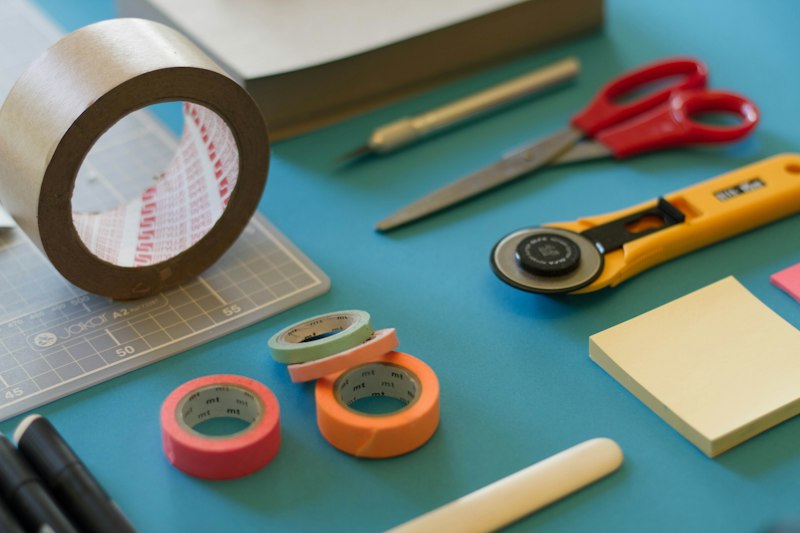
Base boards, massing models and 1:1 mockups that stay dead flat on the table and survive the trip to the client.
Set flats, scenery, signage and oversized props — rigid enough to stand, light enough to strike in minutes.
Shields, plates and weapons with real rigidity at a weight you can wear all day. Sand, prime, paint.
Freestanding walls, plinths and point-of-sale units, printed direct or wrapped. Recyclable after the show.
Full-scale chairs, tables and joinery mockups to test proportions before committing to timber or steel.
Science fair boards, STEM structures, art installations and studio work — safe to cut, safe to recycle.
Cutting. Up to around 20mm, a fresh craft-knife blade against a steel rule does it in two or three passes — score the top liner, cut the core, finish the bottom liner. Thicker sheets want a fine-tooth hand saw, jigsaw or bandsaw. Curves: jigsaw or scroll saw. Always cut on a mat or sacrificial board.
Joining. PVA and hot glue both bond the kraft face well. For butt joints, glue the edge and reinforce with kraft tape or a strip of liner. For structural joints, slot the sheets together (half-lap) or add a timber or honeycomb corner post.
Edges. Open cells show on a raw cut. Seal them with self-adhesive kraft tape, a strip of paper liner, or a skim of filler paste sanded flush — or make them a design feature.
Finishing. Prime with gesso or diluted PVA, sand lightly, then use acrylic, emulsion or spray paint. Build water-heavy techniques in thin layers. Printed graphics can be applied direct to the kraft face or wrapped around the edges.
One honest limit: it is paper. Keep it dry, and for anything living outdoors specify a coated or laminated sheet.
A classroom scenario — illustrative
Imagine a school design department losing a week of every project to foam board that dents, warps and cannot be recycled. For a term's bridge-building unit they switch to 15mm honeycomb sheet: students cut it with craft knives, glue it with PVA, and the strongest bridge holds a stack of textbooks before it fails — through the joints, not the board.
From there it becomes a standing order of mixed thicknesses each term, with the offcuts going to the school's paper recycling. That is the pattern we see: the material stops being the reason a model doesn't match the drawing.

| Project | Thickness |
|---|---|
| Model base boards, signage | 10–15mm |
| Cosplay plates, small props | 10–20mm |
| Display walls, set flats | 20–30mm |
| Furniture prototypes, plinths | 30–50mm |
Not sure? Ask for the sample kit — three densities to cut, glue and paint before you order.
For anything that must stay flat and rigid — architectural models, cosplay armour, stage props, display stands, furniture prototypes — paper honeycomb sheet outperforms corrugated cardboard and foam board. It does not bow under its own weight, cuts to a clean edge, and takes paint, glue and print directly on its kraft face.
Sheets up to about 20mm cut cleanly with a sharp craft knife in two or three passes against a straight edge. Thicker sheets cut best with a fine-tooth hand saw, jigsaw or bandsaw. Curves can be cut with a jigsaw or hot-wire-free scroll saw. Seal cut edges with a strip of kraft tape or a filler paste for a finished look.
Yes. The kraft liner accepts acrylic, emulsion, spray paint and most primers. For a smooth gallery finish, apply a coat of gesso or PVA first, sand lightly, then paint. Water-heavy techniques should be built up in thin layers so the paper face does not saturate.
Comparable by area, but honeycomb is much stiffer for the same thickness and far more rigid in large panels. Foam board bows and dents; honeycomb resists both. It is also fully recyclable, where foam board is a laminate that usually goes to landfill.
Tell us how many sheets you need and the size and thickness, and we will quote. We are a manufacturer rather than a retail shop, so orders are quoted per job — studios, schools, event builders and design offices are regular customers. Collection from Balakong, Selangor is welcome by appointment, and we deliver across the Klang Valley.
Tell us the project, the size and how many sheets you need. We'll quote it, and send a sample kit so you can cut, glue and paint before you commit.
Need industrial quantities or packaging-grade sheet? See honeycomb cardboard sheets.